
What I Think About Before I Create
You already know how to create a beautiful mini movie. Now I want to show you how I think about my videos before I create them, because that's what decides whether a reel gets 2,000 views or 44 million.
No one can promise you a viral video. The algorithm is something none of us can control. But there are patterns I see again and again in my reels that went viral, and once you know them, you can build them into every idea.
To make it easy to connect the dots, I'll explain everything using one of my own reels, The Christmas Escape, which got over 44 million views. Watch it first, with sound if you can.
Watch It First
The Results
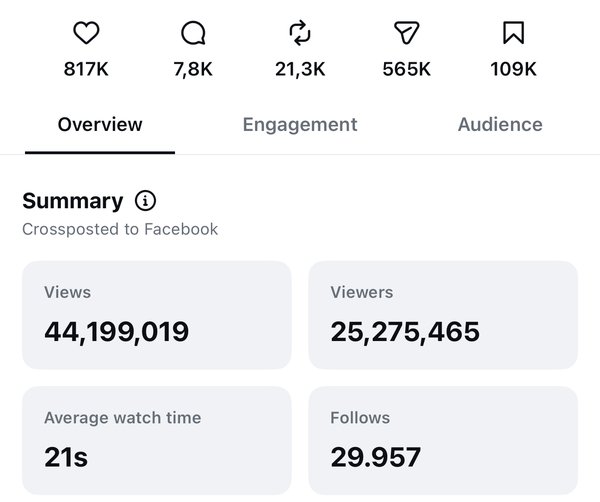
- 44.2 million views across Instagram and Facebook, since I crossposted it.
- 565K shares and a share rate of 2.2%, which Instagram marks as higher than usual.
- 21 seconds average watch time on a 29-second reel.
- 29,957 new followers from one reel.
Where the Idea Came From
I saw a short animated video, almost like a cartoon. A couple is lying in bed laughing, she farts, packs her things into a suitcase and leaves the house. Outside, she farts again and shoots up into space like a rocket. No one says a word.
It made me laugh, but I didn't copy it. I kept only the feeling: being so embarrassed that you just want to disappear. Everything else, I created myself:
Instead of an animation, I moved it into a 90s Hollywood Christmas movie: a glamorous mansion, a fireplace, snow outside.
I wrote my own script, with a calm, sweet boyfriend ("it's okay," "everybody farts") and her short punchline: "Not me."
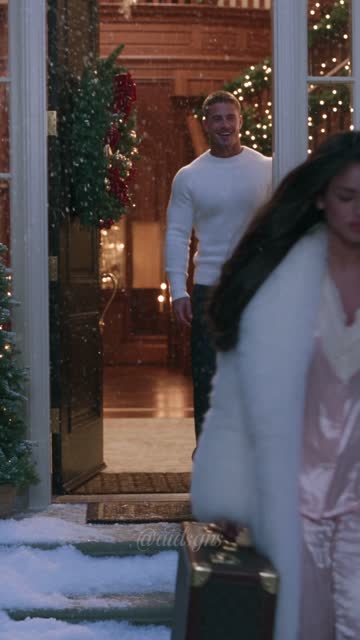
The white fur coat over satin pajamas, walking out into the snow.
No rocket into space. Just her walking away and him laughing in the doorway, a reaction everyone recognizes.
Same feeling, completely new story. That's what I mean when I say: never copy, always add your own spin.
Instagram Tells You What Matters
Open the insights of any reel and look at "What affects your views." Instagram lists the rates in order of importance to reach. Here are the ones for this reel:
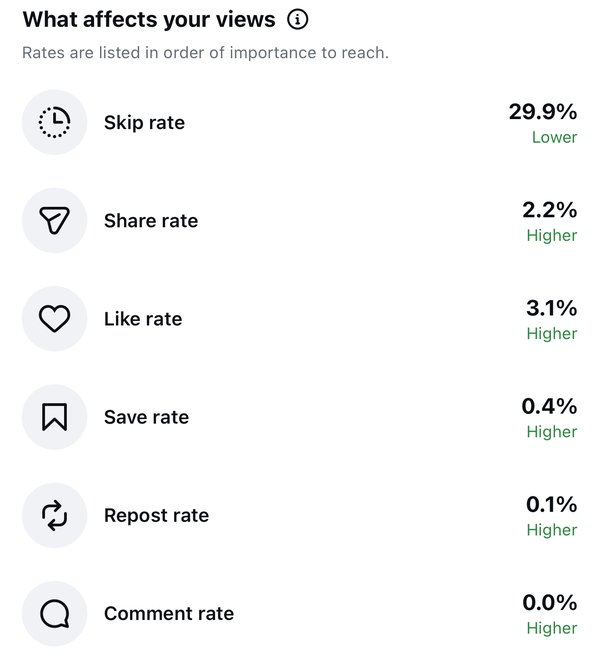
How many people scroll away right at the start. The lower, the better. Your first 2 seconds decide this.
How many people send your reel to someone. This is what pushes your reel to people who don't follow you.
So every idea has two jobs: stop the scroll, and make people want to send it. Now let's see how this reel did both.
The 2-Second Rule
You have 2 seconds.
People’s attention spans are getting shorter and shorter. Not long ago, we had around 3 seconds to stop someone from scrolling. Now we only have 2. If you don’t make them stop in those first 2 seconds, they’re gone, and they won’t come back.
That’s why something unexpected has to happen right away, not after a slow introduction.


It Doesn't Always Have to Be a Surprise
In this reel, the hook was something unexpected. But that's only one way to stop the scroll. What all good openings have in common is this: in the first 2 seconds, the viewer starts asking a question, and they stay to get the answer.
Your viewer should feel like they just walked in on something that's already happening. Here are a few ways to do it:
Like the fart. The question: "What will she do now?"
Someone is staring at something with a terrified face. Nothing has happened yet, but everyone wants to know: "What is she looking at?"
Someone is running, hiding or crying. The question: "Why? From whom? What happened?"
A couple is mid-argument, someone just got slapped, a secret is about to come out. The viewer feels they arrived at the best part. You'll see this in my 15.9M view reel in Module 15.
What to Avoid: The Slow Intro
Someone walking for 10 seconds, a long shot of a house, a character slowly waking up before anything happens. By the time the story starts, your viewer is already gone.
Start your story as late as possible. Skip the setup and begin where it gets interesting. In your Seedance prompt, say it clearly: "Begin with immediate action in the first frame."
Ask yourself: what question do my first 2 seconds make people ask? If the answer is "none," change your opening.
Why People Sent It: The Psychology
People don't share videos, they share meaning: "this is you," "this is us." Everyone has had an embarrassing moment in front of a partner, so people sent this reel to theirs.
Just look at the comments. People weren't only laughing, they were seeing themselves in her:
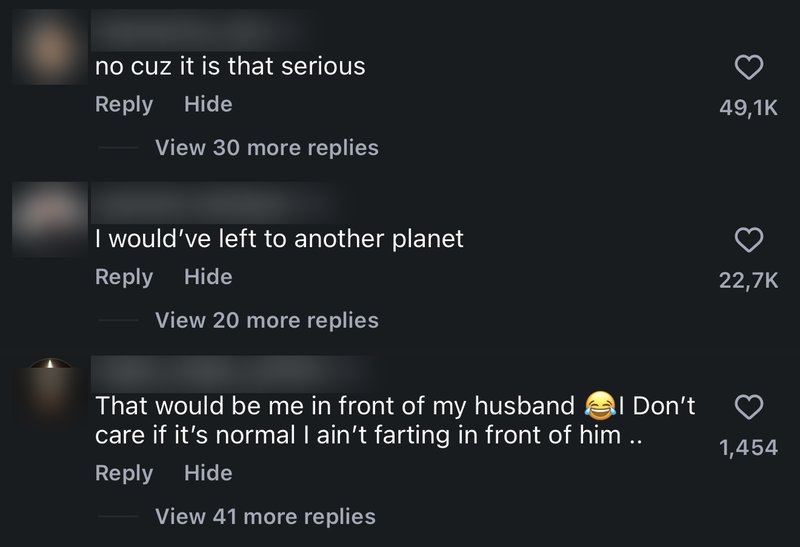
49,100 likes on "no cuz it is that serious." That's 49,100 people saying "yes, same." And when people relate, they tag the person it reminds them of:
Every tag is a share. Someone sends your reel to a friend, the friend watches it, and Instagram learns that your reel is worth showing to more people.
We laugh when something breaks the rules but nobody really gets hurt. A fart in a glamorous Christmas mansion breaks the mood, but it's harmless, so it's funny, not awkward.
Nobody actually packs a suitcase and walks into the snow over a fart. But everyone has felt like disappearing after something embarrassing. The reel acts out the feeling, not reality.
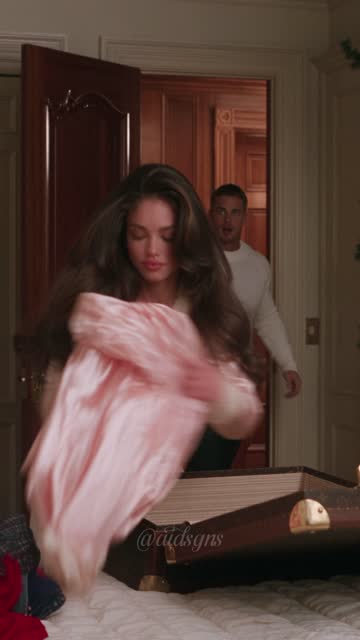

She's full of drama, he's calm and amused ("it's okay," "everybody farts"). Viewers love him, laugh at her, and nobody feels bad sending it.
Her answer, "Not me," is two words of total denial. That's the line people quote when they send it.
And they did. People started using her line about themselves:
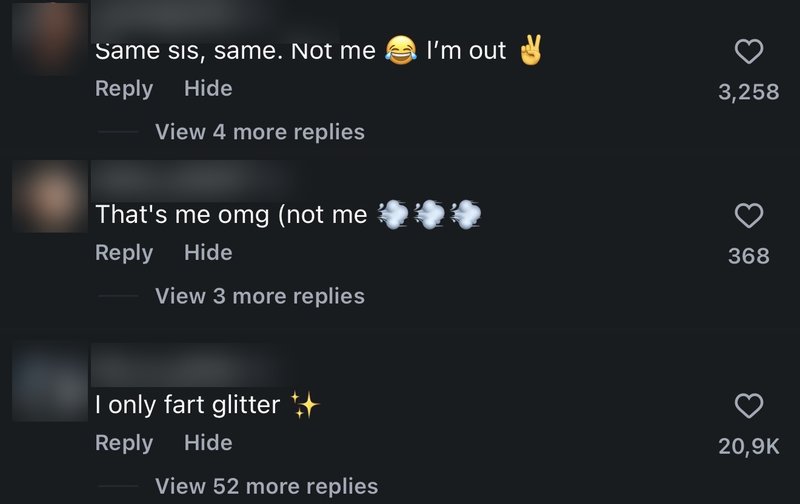
When your audience repeats your punchline as their own joke, it has stuck. A long line could never do that.
Christmas mansion, white fur, snow. A gross little moment in a glamorous movie world is what makes it so funny.
She walks out into the snow, he stays in the doorway laughing, and it ends. No fade-out, no extra seconds, so people watch it again.

About 15 words of dialogue in total. Faces and actions tell the story, so it works in any language and on mute.
Want to try it yourself? The full prompt for this reel is in Prompt 14 · The Christmas Escape.
The formula: ordinary embarrassing moment + glamorous cinematic world + something unexpected in the first 2 seconds + over-the-top reaction + 2-word punchline + end on a reaction.
Leave Room for Debate
Sometimes I don't explain everything on purpose. When the audience isn't 100% sure what happened, they comment, they argue with each other, and they rewatch to check who's right.
This reel did exactly that. You hear the fart, but you don't see who did it. So the comments filled up with one question: "Who farted?" Was it her? Was it him? People argued, tagged their friends to settle it, and went back to watch it again and listen more carefully.
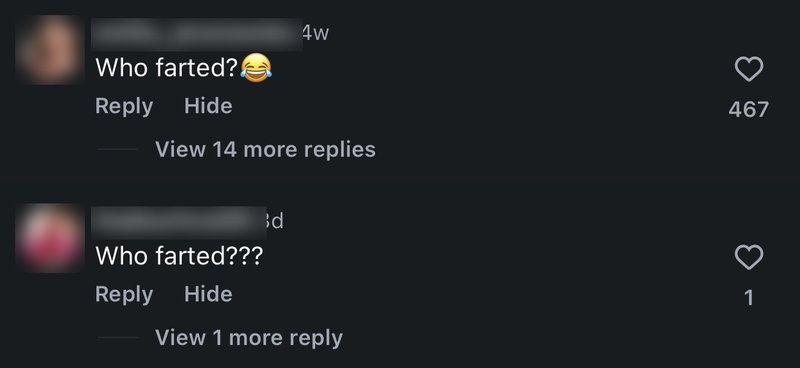
Look at the first one: 467 likes and 14 replies on a single comment. That's a whole conversation happening under the reel, and every reply brings people back.
When that happens, don't rush to explain it in a pinned comment. That ends the debate. Instead, reply playfully and keep the mystery alive, for example: "or did she? 👀" or "rewatch the beginning 😏" You'll see another example of this in Module 15.
Confused about the story is great. Feeling tricked or offended is not. Keep it fun.
Every moment in this reel uses a psychological trigger: a natural reaction our brains have. In the next module, I'll explain each trigger one by one, so you can use them on purpose.
Where My Ideas Come From
I get most of my ideas from everyday life. I'm scrolling, or my husband sends me a funny video, and something makes me laugh. Then I use that to make my own reel.
I never copy them. Ever. I always add my own spin. Here's how you can do the same:
- Take the feeling, not the scene. What made you laugh? The embarrassment? The drama? The revenge?
- Move it into a cinematic world. A 90s Christmas, a luxury hotel, a romantic comedy.
- Exaggerate the reaction. Make it bigger than the problem.
- Give it a short, funny last line and end on a reaction.
Before You Create: Your Checklist
Go through this before you generate anything. If you can't tick most of these, change something in your idea first.
Your Turn
Fill this in for your next idea. It's saved on this device, and you can copy it straight into your Prompt Builder.
Paste it into your Seedance Prompt Builder and ask it to turn your idea into a 30-second mini movie prompt.
From Your Idea to a Prompt
A great idea only works if your video actually shows it. That's why your Prompt Builder needs to know where the hook is, how fast things happen and how it ends. Here's how my idea turned into the instructions inside Prompt 14 · The Christmas Escape:
Tell it the first frame is already in the middle of the moment:
"FIRST FRAME: ACTION ALREADY HAPPENING. The boyfriend is ALREADY playfully tickling his girlfriend."
Say exactly when the unexpected moment happens, and that it's the hook:
"IMMEDIATELY, WITHIN THE FIRST 2–3 SECONDS… The fart is the immediate hook."
Tell it what NOT to do, so it doesn't add a boring intro:
"NO slow-motion. NO unnecessary establishing shots. NO static opening."
One sentence about the feeling helps the actors' reactions:
"The humor comes from her absolutely ridiculous overreaction, his affectionate disbelief, and the contrast between their beautiful romantic surroundings and the absurd situation."
Write the exact dialogue (short!), and describe the final reaction the video should end on.
Your turn: copy your idea from the template above, paste it into your Seedance Prompt Builder, and ask it to include these five things. Then check the prompt it gives you against the checklist before you generate.
🔥 Then run it through the Viral Check. Paste your prompt and it shows you which triggers you used, what your story already does well and what to fix before you generate.
Next, let's look at the psychology behind it. ❤️